The 4Cs
Cut
Cut is the most important of the 4Cs.
It determines how a diamond handles light—its brightness, fire, scintillation, symmetry and overall beauty.
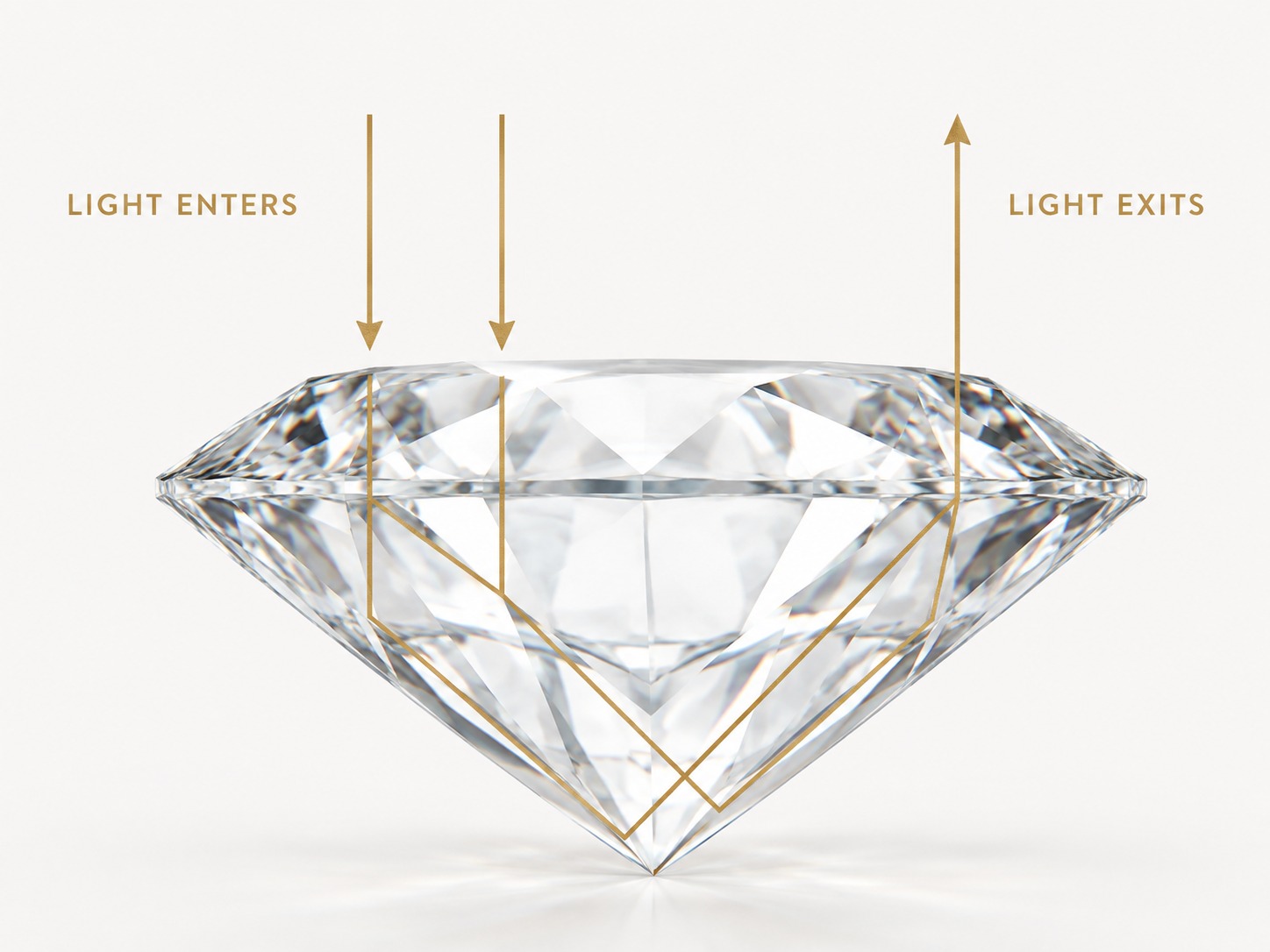
A well-cut diamond returns light to your eye, revealing its true brilliance.

Cut is the most important of the 4Cs.
It determines how a diamond handles light—its brightness, fire, scintillation, symmetry and overall beauty.
A well-cut diamond returns light to your eye, revealing its true brilliance.
A well-cut diamond is designed to return as much light as possible to your eye.
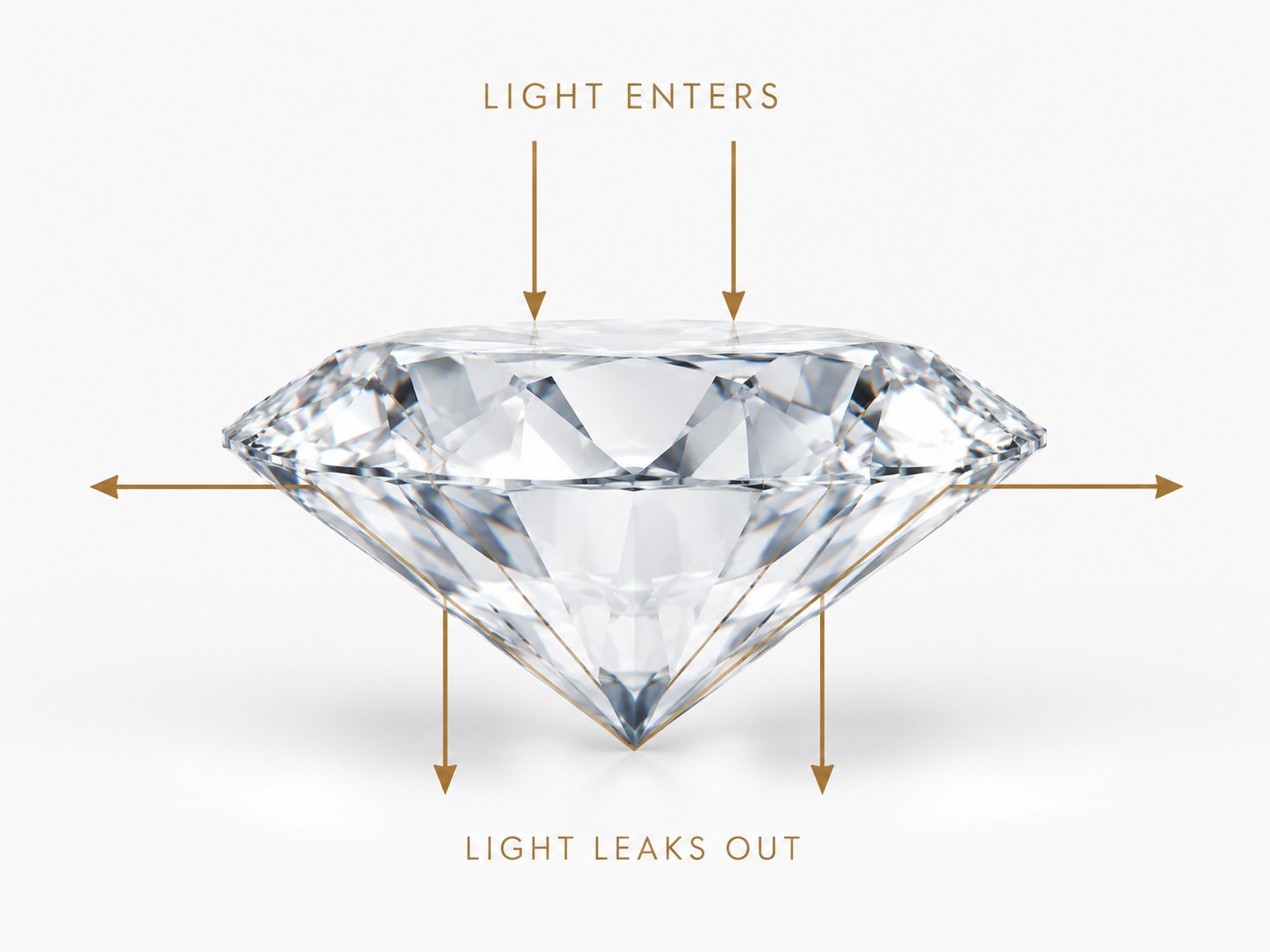
Poor proportions may allow light to leak—causing it to look dull, dark, watery, or flat and small.
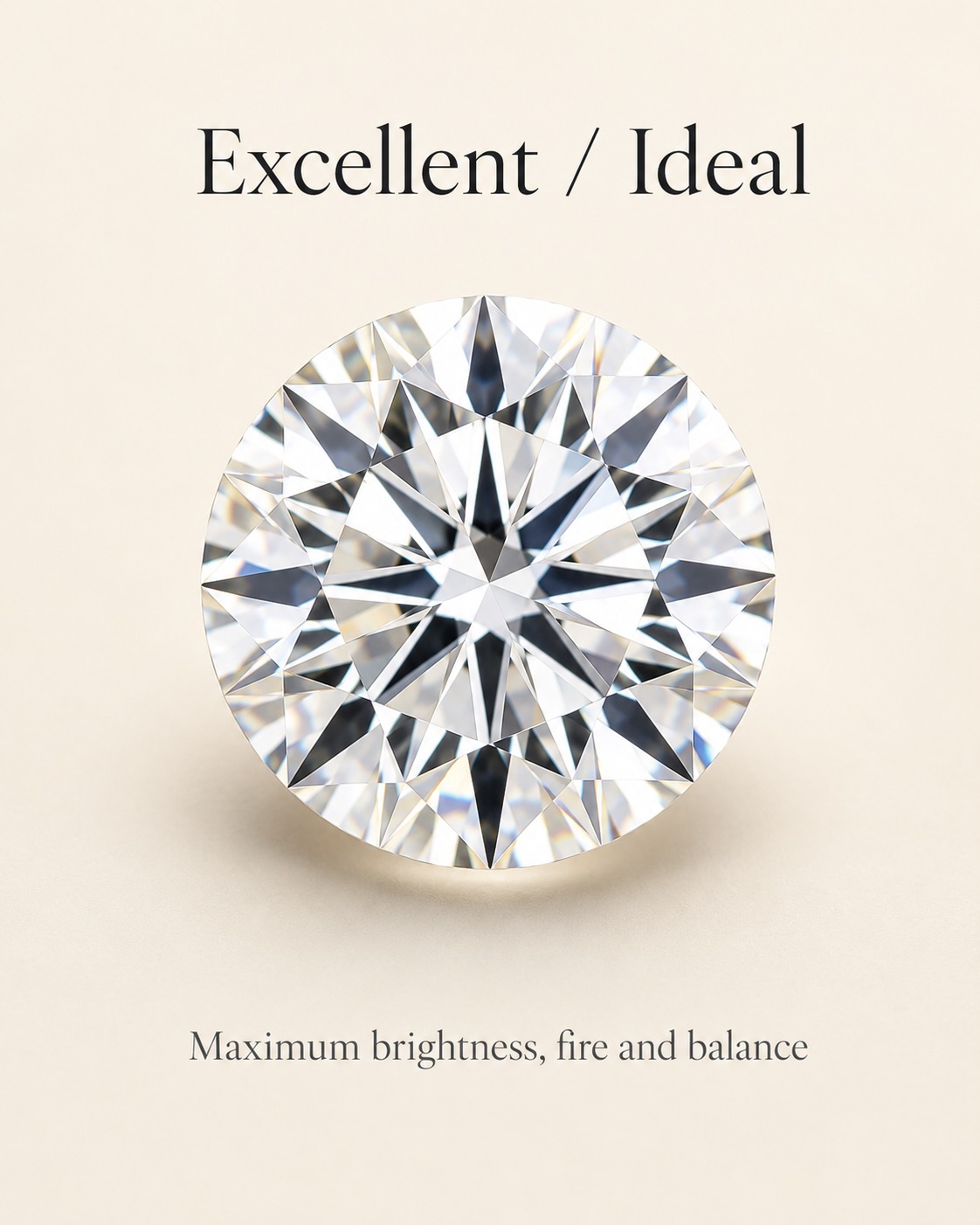
Cut grades evaluate how well a round diamond returns light.
These images show general light performance for each grade.
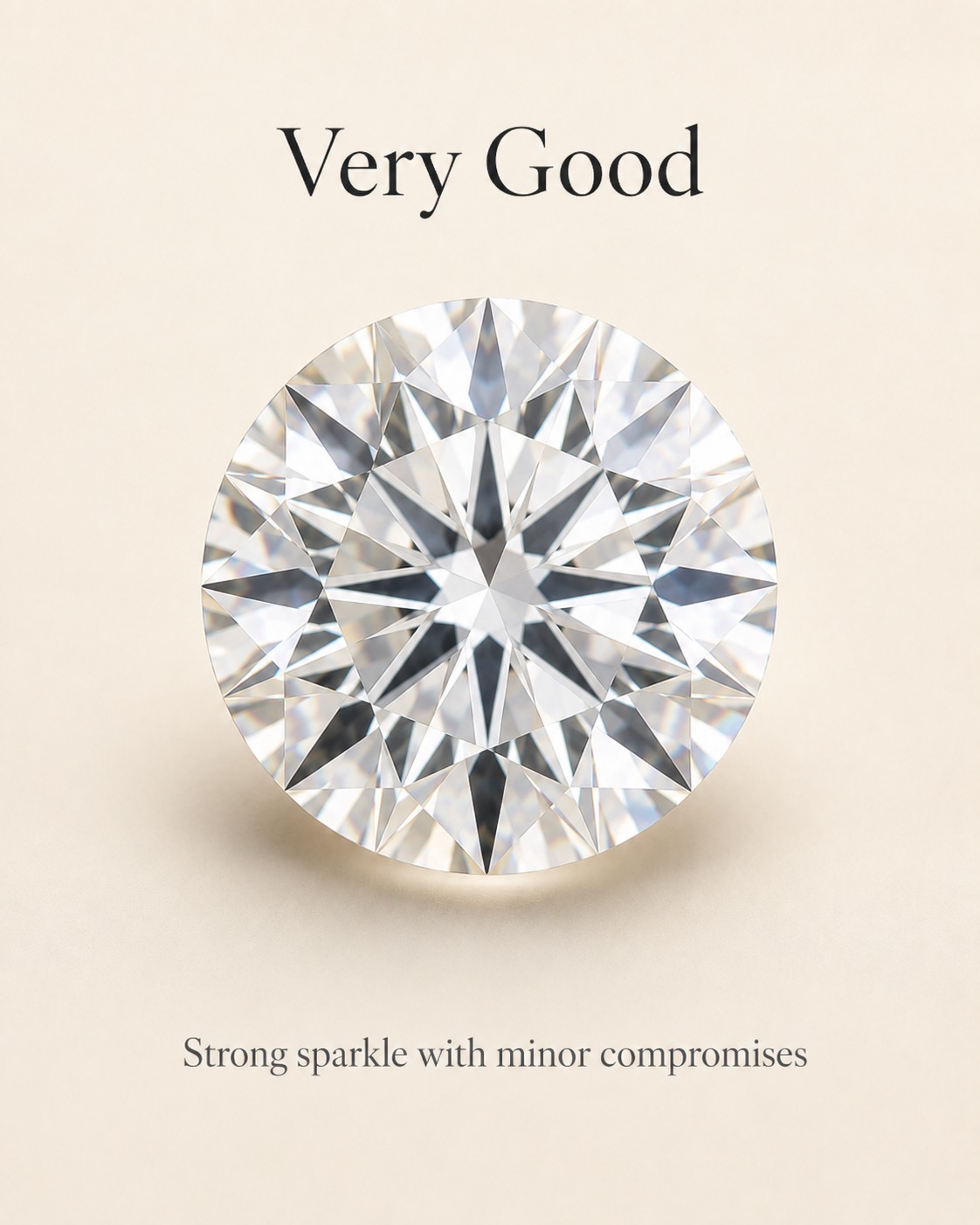
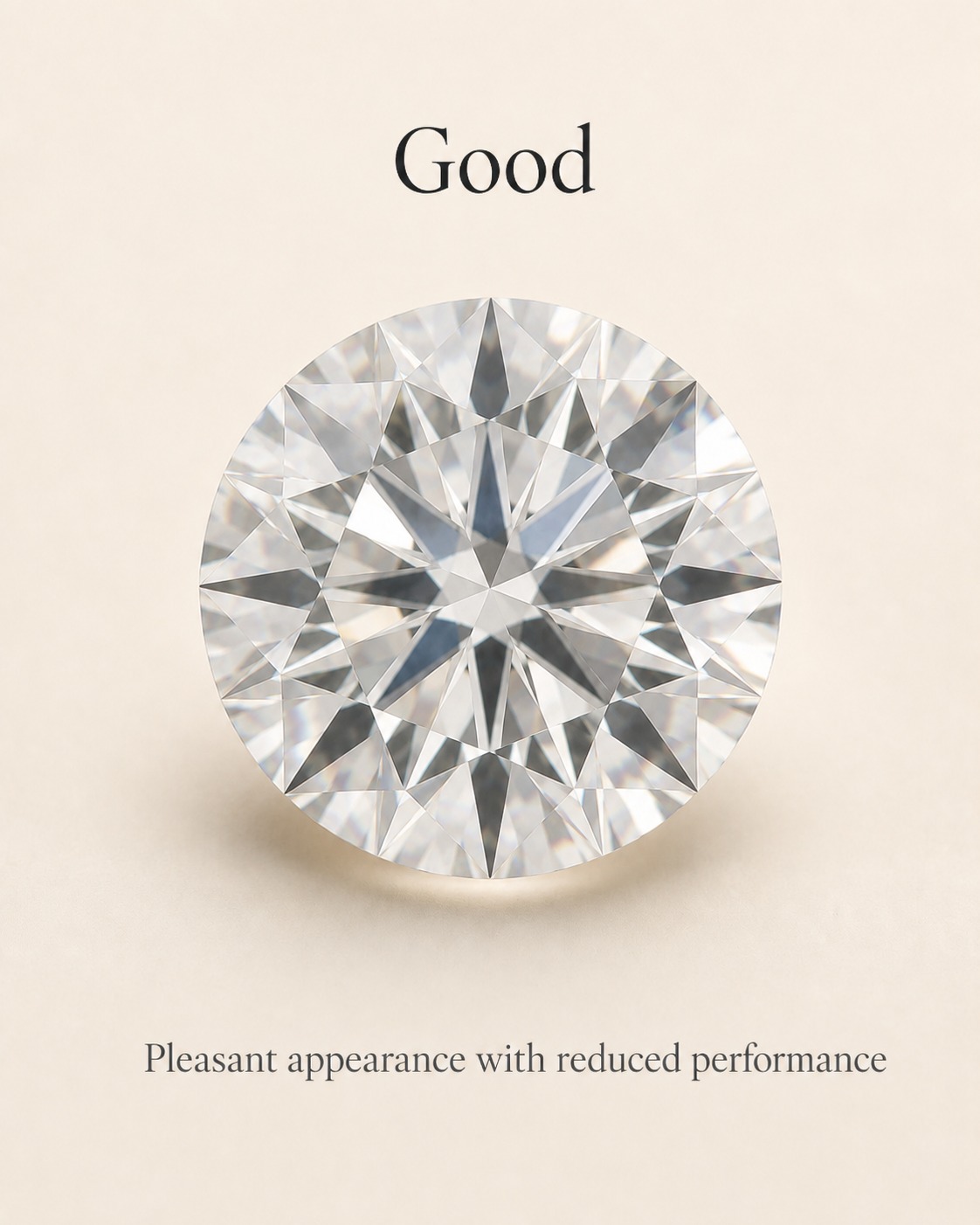
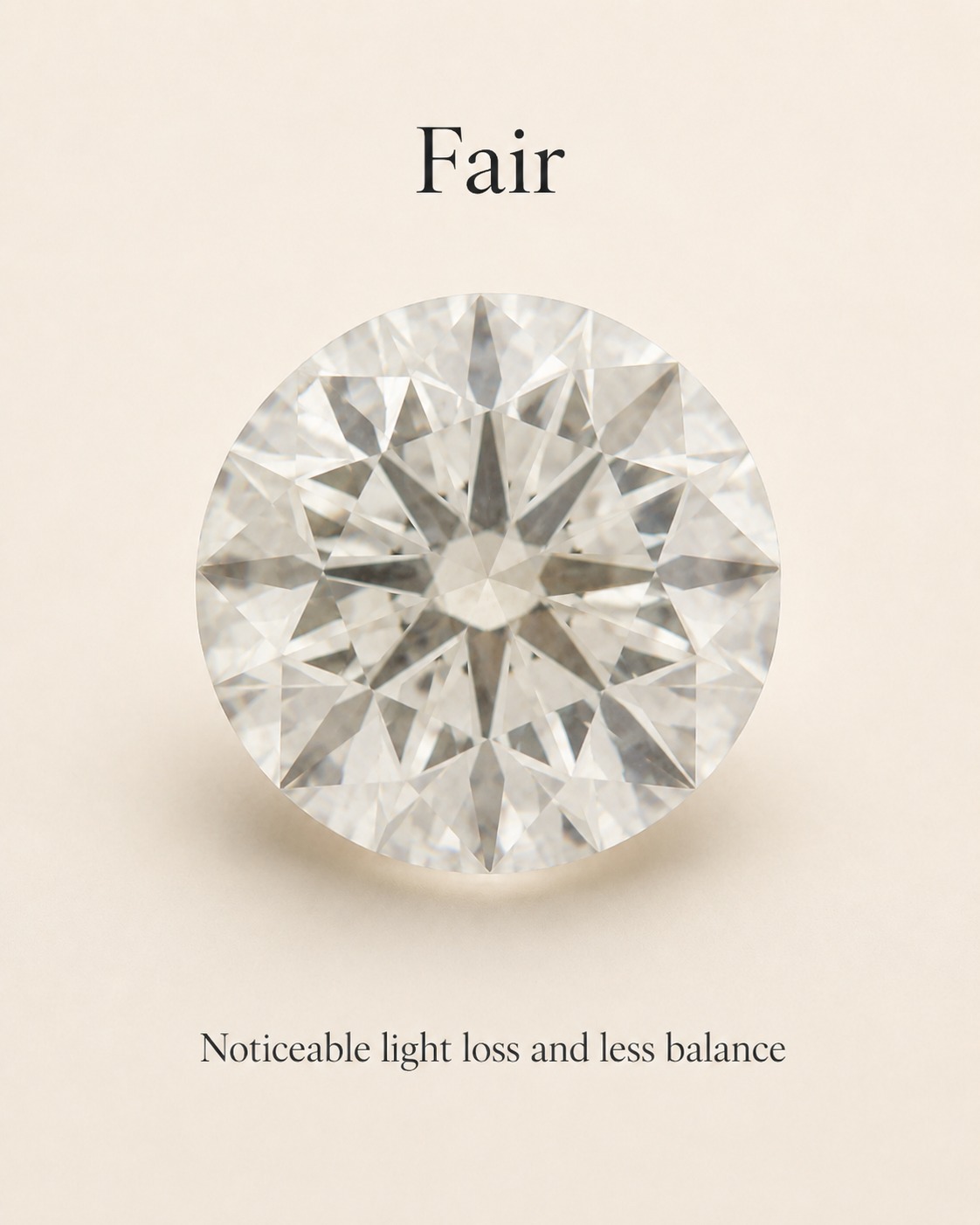
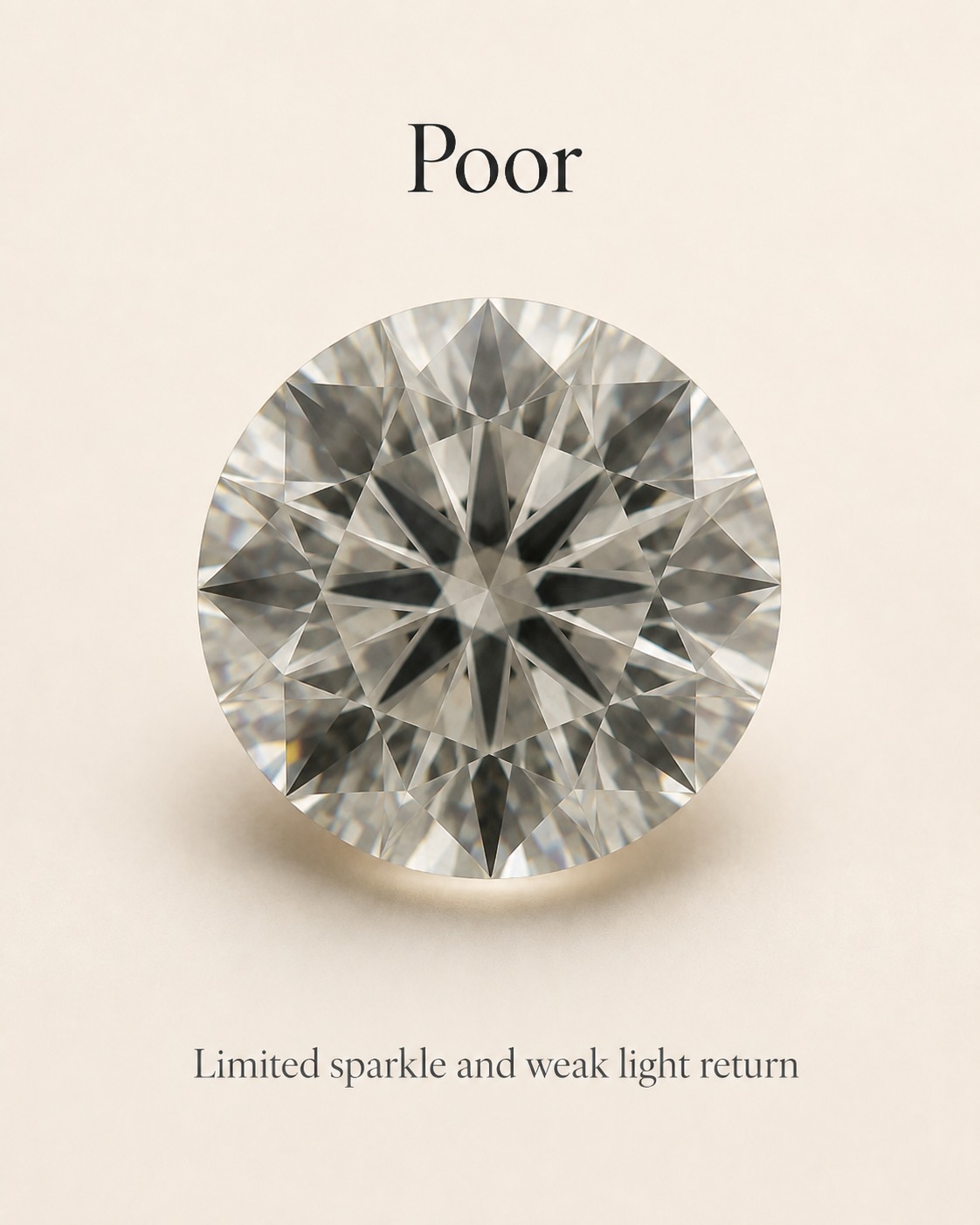
Only round brilliant diamonds receive a cut grade from GIA.
Other shapes are graded on other factors; cut terminology can vary by laboratory.
Many factors work together to create true optical performance.
| Proportions | The foundation of a diamond’s light performance. |
| Polish | The smoothness of a diamond’s surface. |
| Symmetry | The precision of facet alignment and placement. |
| Table % | The size of the table relative to the diamond. |
| Depth % | The total depth of the diamond. |
| Crown & Pavilion Angles | Angles that control how light enters and exits. |
| Girdle | The thin outer edge that protects the diamond. |
| Fluorescence / Inclusions | Secondary characteristics that can affect appearance and value. |
Shape refers to the outline of the diamond. Cut refers to how well it is cut.
Cut affects how the diamond is proportioned to perform with brilliance.
Fancy shapes are graded by laboratories on polish, symmetry,
and proportions—cut terminology can vary.
Two diamonds can weigh the same but look very different face up. Well-proportioned diamonds appear larger and deliver more presence for the same carat weight.
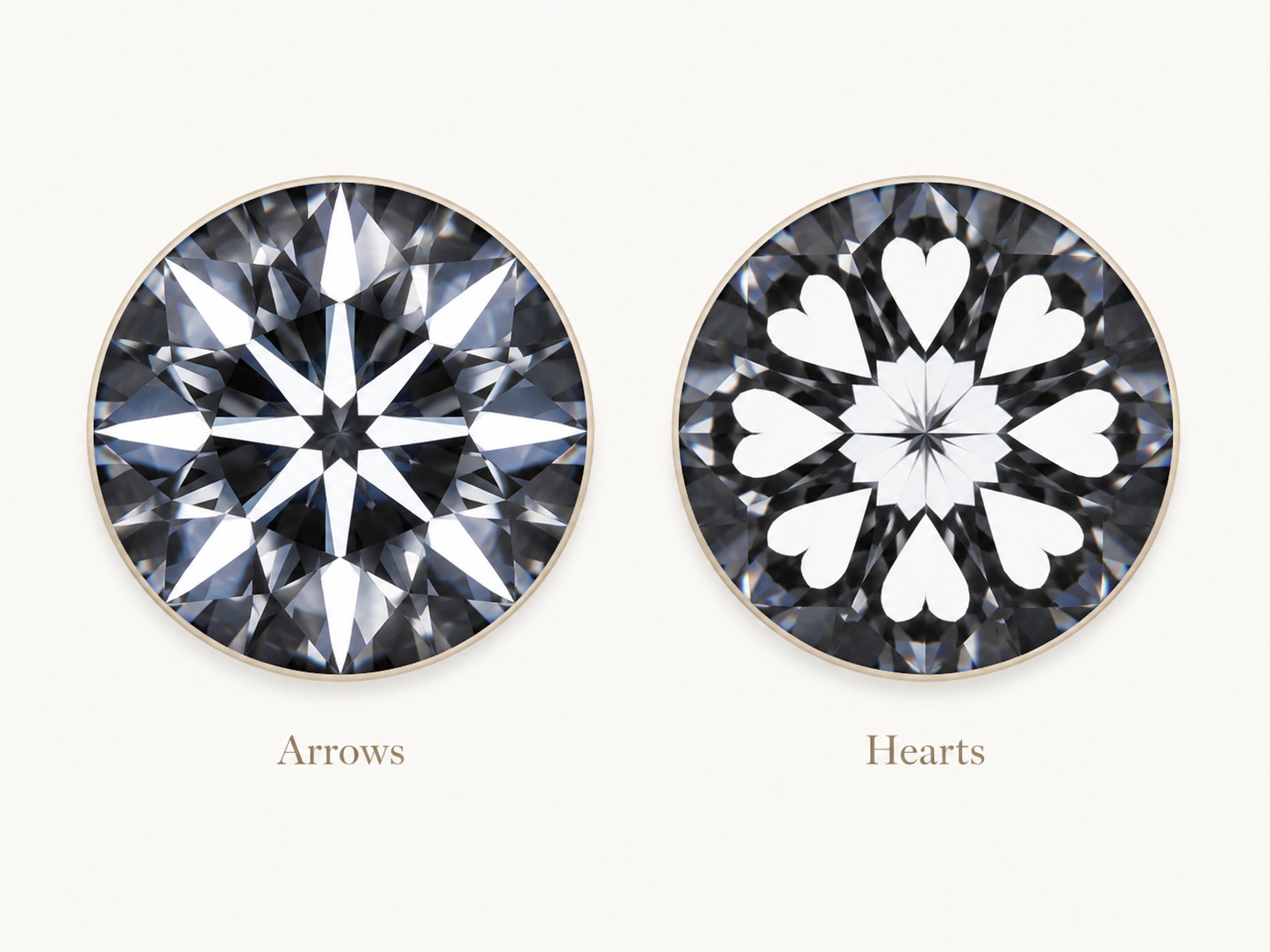
Hearts & Arrows is a precision optical pattern seen in some exceptionally well-cut round brilliants. Arrows are visible from the crown (face-up view), while hearts are visible from the pavilion side—revealed under a scope.
This pattern can indicate strong optical symmetry and excellent light performance, but it is one indicator, not the whole story.